
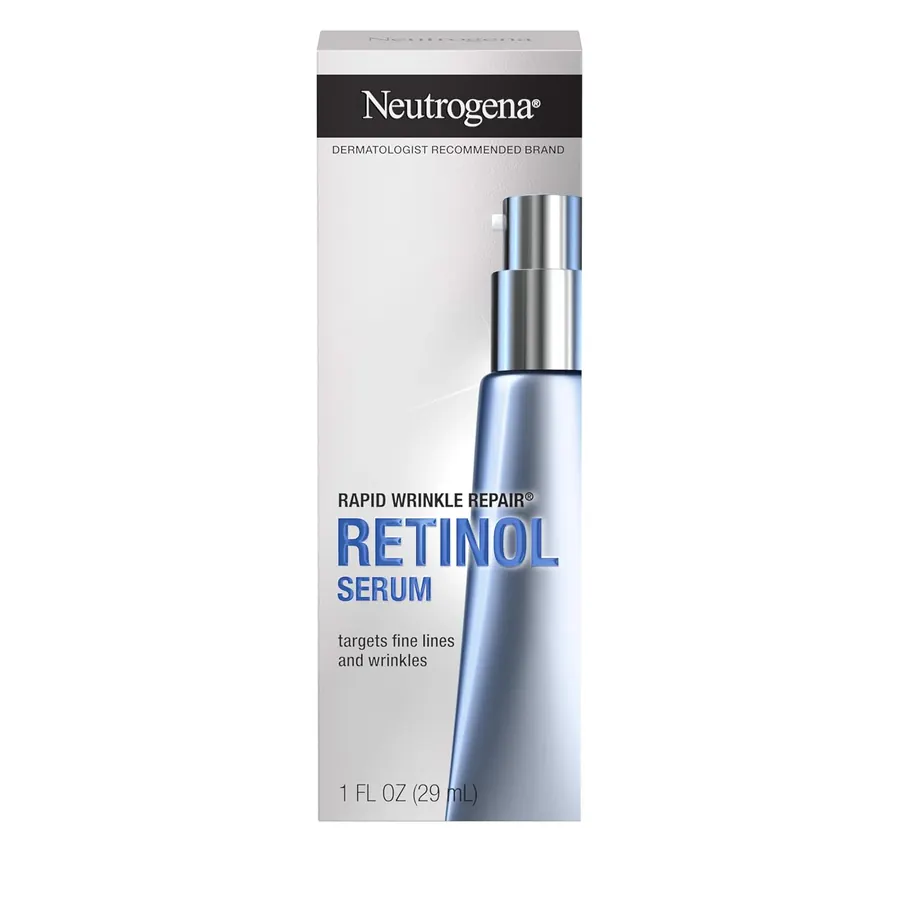
The short answer: it depends on what your skin is actually trying to fix. Neutrogena Rapid Wrinkle Repair Retinol Serum is a straightforward retinol product aimed at fine lines, uneven texture, and dullness. Differin Adapalene Gel 0.1% is a different molecule entirely, technically a retinoid that was prescription-only until 2016, and its primary clinical history is in acne treatment. Both work by speeding up cell turnover, but they land differently on the skin and serve somewhat different purposes.
If you are reading this trying to decide between the two, you are probably 30-plus, starting to notice fine lines, dealing with some congestion or blemishes, and wondering which bottle to put in your medicine cabinet. I have used both, tested each on my own skin across different seasons, and talked to enough customers over the years to know where the confusion comes from. This comparison walks through every meaningful difference so you can pick the right one without guessing.
| Neutrogena Rapid Wrinkle Repair Retinol Serum | Differin Adapalene Gel 0.1% | |
|---|---|---|
| Active Ingredient | Retinol (vitamin A alcohol) | Adapalene 0.1% (synthetic retinoid) |
| Regulatory History | OTC cosmetic (always been) | Formerly Rx-only, OTC since 2016 |
| Primary Use Case | Fine lines, texture, radiance | Acne, congestion, cell turnover |
| Anti-Aging Evidence | Strong clinical backing for wrinkle reduction | Growing body of evidence, historically thinner than retinol |
| Purge Risk | Moderate — depends on starting frequency | Higher, especially weeks 2-6 |
| Texture | Lightweight serum, slightly slippery | Clear gel, dries slightly tacky |
| Skin Sensitivity | Moderate irritation potential at daily use | Can be more drying at first; formulated for acne-prone skin |
| Fragrance | Light fragrance | Fragrance-free |
| Amazon Rating | 4.4 stars / 6,243 reviews | Not linked here |
| Price (approx.) | Budget-friendly for 1 fl oz | Check today's price on Amazon |
Where the Neutrogena Retinol Serum Wins
The Neutrogena Rapid Wrinkle Repair Retinol Serum has decades of retinol research behind it. Retinol, which is a form of vitamin A that converts to retinoic acid in the skin, has some of the strongest anti-aging data of any OTC ingredient. Studies going back to the 1990s and expanded through the 2010s consistently show measurable reduction in fine lines, improvements in skin firmness, and increased collagen synthesis with regular retinol use. When you are primarily motivated by the crow's feet around your eyes or the horizontal lines forming across your forehead, retinol is the ingredient with the most direct clinical support.
The serum format also matters here. The Neutrogena formula absorbs quickly into skin, does not sit heavy, and layers cleanly under a moisturizer or SPF. I found it workable even in the warmer months when I do not want anything that feels thick. The addition of hyaluronic acid in the formula helps offset some of the dryness you typically associate with retinol, though I would still recommend applying a light moisturizer over it on the nights you use it. It earns its 4.4-star rating across 6,243 reviews largely because it delivers real, visible improvement in texture and fine lines without being a derm-only product. If you want more detail on the long-term experience, the Neutrogena Retinol Serum five-month review covers how it performs over extended use.
Where Differin Adapalene Gel Wins
Differin wins clearly on two fronts: acne and comedone clearance. Adapalene was developed as an acne treatment, and its mechanism, which involves regulating how skin cells shed and reducing the inflammation cascade that causes breakouts, is extremely well-documented for that purpose. If your skin is congested, you get clogged pores regularly, you have active blemishes alongside fine lines, or you struggle with post-acne marks, adapalene is the stronger choice for clearing that backlog.
Differin is also fragrance-free, which matters for skin that is already irritated or sensitized. The gel texture feels like nothing on skin after it absorbs, and many users with oily skin prefer it specifically because it does not add any slip or moisture to a complexion that already has plenty. On the anti-aging front, a 2017 study published in the Journal of Drugs in Dermatology showed adapalene showed comparable effectiveness to 0.05% tretinoin for photodamage markers over 24 weeks, which is promising, though the retinol anti-aging data set is still larger. Differin is the right call if acne or congestion is the main complaint and fine lines are a secondary concern.
Focused on fine lines and texture? The Neutrogena serum has five months of real-world data behind it.
Neutrogena Rapid Wrinkle Repair Retinol Serum is budget-friendly and has over 6,200 verified reviews. It is one of the most tested retinol serums on the market, and it is available through Amazon with no prescription required.
Amazon Check Today's Price on Amazon →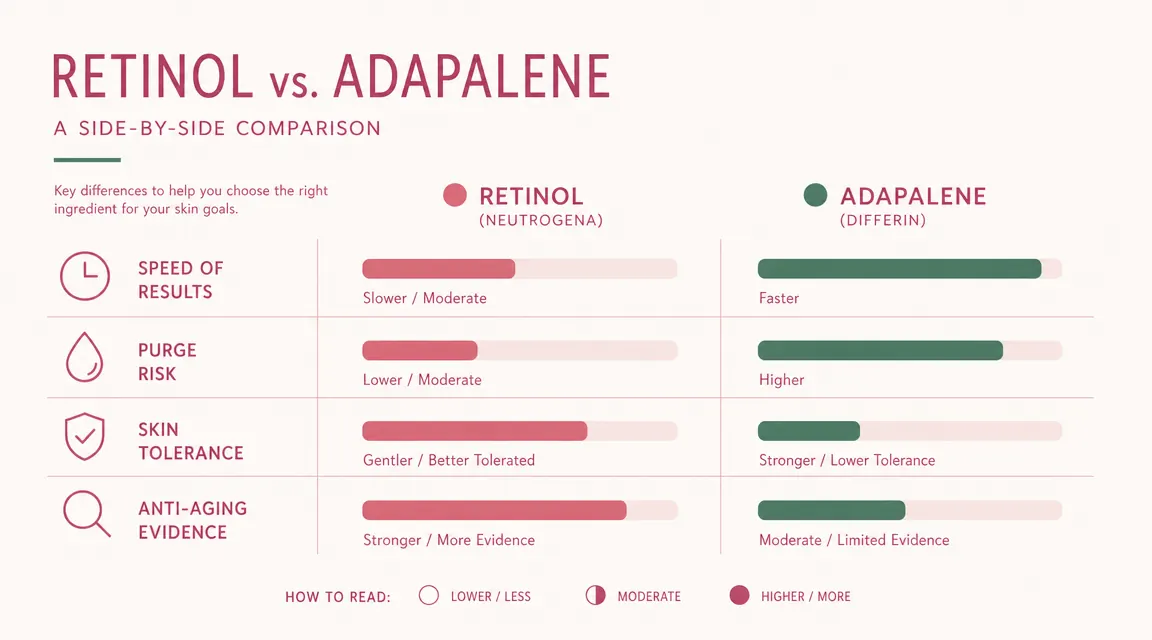
Ingredients Side by Side
The molecules are meaningfully different. Retinol is vitamin A in its alcohol form. It requires two conversion steps in the skin before it becomes retinoic acid, the active form your skin actually uses. That conversion process is what makes retinol gentler than prescription tretinoin: you lose some potency in the conversion, but you also lose some of the intensity of side effects. Adapalene is a third-generation synthetic retinoid. It binds directly to specific retinoic acid receptors and does not require the same conversion steps. That makes it more targeted to its intended receptor pathways and generally more stable than retinol (retinol degrades with light and air exposure; adapalene does not).
In practice, what this means is that adapalene tends to deliver faster and more consistent acne clearance at lower concentrations, while retinol at higher concentrations can match or exceed adapalene for collagen-related anti-aging work. Neither is flatly better. They are different tools with overlapping but not identical applications.
Retinol and adapalene are both vitamin A derivatives. The real question is which pathway your skin needs: wrinkle reduction and radiance, or cell-turnover regulation and congestion clearance.
The Purge Question: What to Actually Expect
Both products can cause an initial purge. A retinoid purge happens when accelerated cell turnover brings clogged pores to the surface faster than normal, making breakouts temporarily worse before they improve. With the Neutrogena serum, the purge risk is moderate and highly dependent on how frequently you start using it. Starting every third night and gradually working up to nightly use over six to eight weeks dramatically reduces the severity. Most users who follow a slow-start protocol see little to no purge.
With Differin, the purge is more predictable and, for some skin types, more intense. Weeks two through six are the most commonly reported difficult window. The adapalene molecule is doing a lot of work clearing congestion that has been building under the surface, and that congestion has to go somewhere first. If you have significant congestion or cystic tendency, expect a rougher adjustment period with Differin. It is not a sign the product is wrong for you, but it is worth knowing before you open the tube. For a step-by-step guide to introducing either product without triggering a full-blown reaction, the beginner retinol routine guide covers the buffering method and frequency ladder in detail.
Who Should Buy Which
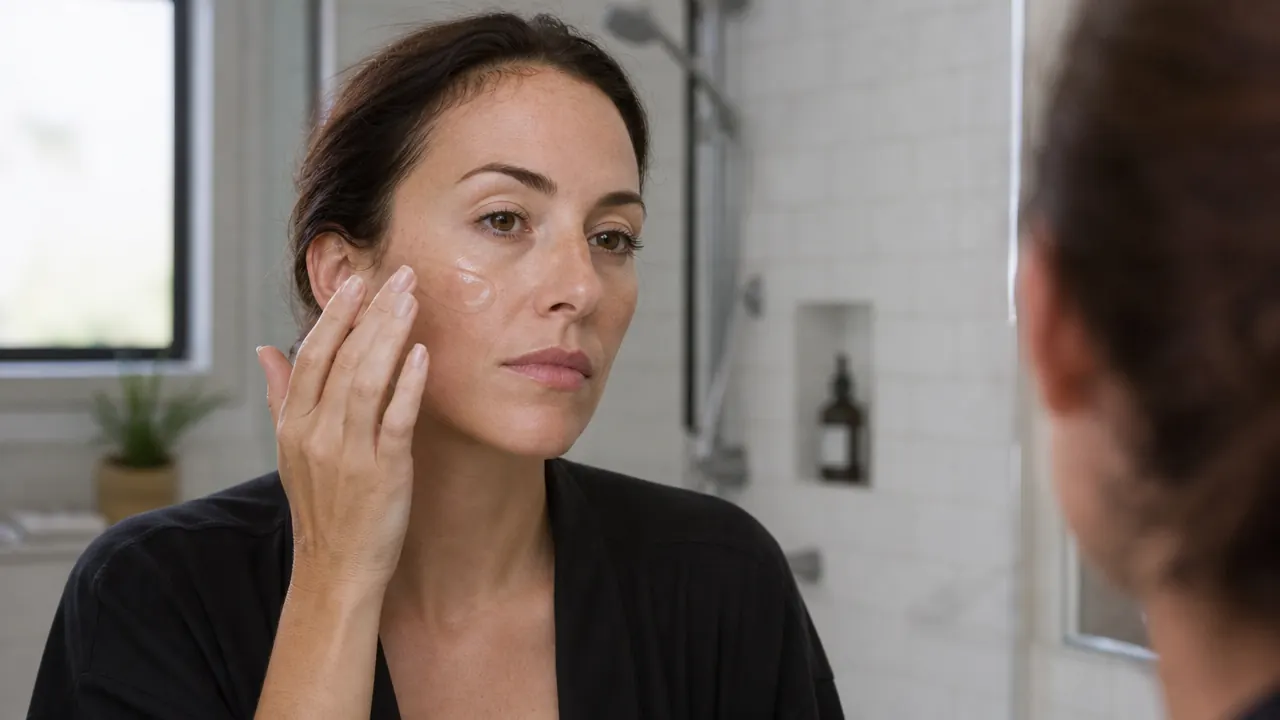
Choose Neutrogena Rapid Wrinkle Repair Retinol Serum if your primary concern is fine lines, forehead creasing, crow's feet, or dull uneven texture, and your skin is not particularly congested. It is also the better pick if you have dry or sensitive skin, because the hyaluronic acid in the formula provides a small buffer and the serum format layers easily under richer moisturizers. If you are 35-plus and focused on visible aging without wanting to spend the premium monthly cost for tretinoin from a prescription service, this is the most practical starting point.
Choose Differin Adapalene Gel if you deal with breakouts, clogged pores, or post-acne hyperpigmentation alongside any anti-aging concerns. It is also the better fragrance-free option for truly reactive skin, despite being technically more potent as a retinoid. If you are in your late 20s or early 30s, still getting periodic breakouts, and starting to see early fine lines, Differin handles both more efficiently than retinol would. Just be prepared for the adjustment window.
If you truly have both concerns in equal measure, some dermatologists recommend using adapalene for the first year to clear congestion and establish tolerance, then transitioning to a stronger retinol or adding it to your morning routine. That is a longer game, but it avoids layering two actives before your skin barrier is conditioned for the workload.
Can You Use Both at the Same Time?
Not on the same night, and not until your skin is well-adjusted to one or the other. Both products work through vitamin A receptor pathways. Using them simultaneously does not double the benefit; it doubles the irritation and barrier disruption risk. The one scenario where some people use both is alternating nights, one on Monday, Wednesday, Friday and the other Tuesday, Thursday, Saturday, with one full rest night. That only makes sense if you have already tolerated each product individually for at least three months with no significant irritation. Starting both at once is a reliable way to strip your barrier and spend two weeks wondering why your skin looks worse than when you started.
Ready to start with retinol? The Neutrogena serum is one of the most accessible entry points available without a prescription.
At a budget-friendly price for a full-size 1 fl oz bottle, Neutrogena Rapid Wrinkle Repair Retinol Serum is one of the most cost-effective ways to start a consistent retinol routine. Check current availability and pricing on Amazon.
Amazon Check Today's Price on Amazon →