
If retinol has been sitting on your mental to-do list for a year, you're not alone. The ingredient has a reputation: peeling, purging, a month of looking worse before looking better. Some of that reputation is earned. Most of it, though, comes from people who started too fast, used too much, or skipped the steps that make the difference between a smooth transition and a raw, irritated face.
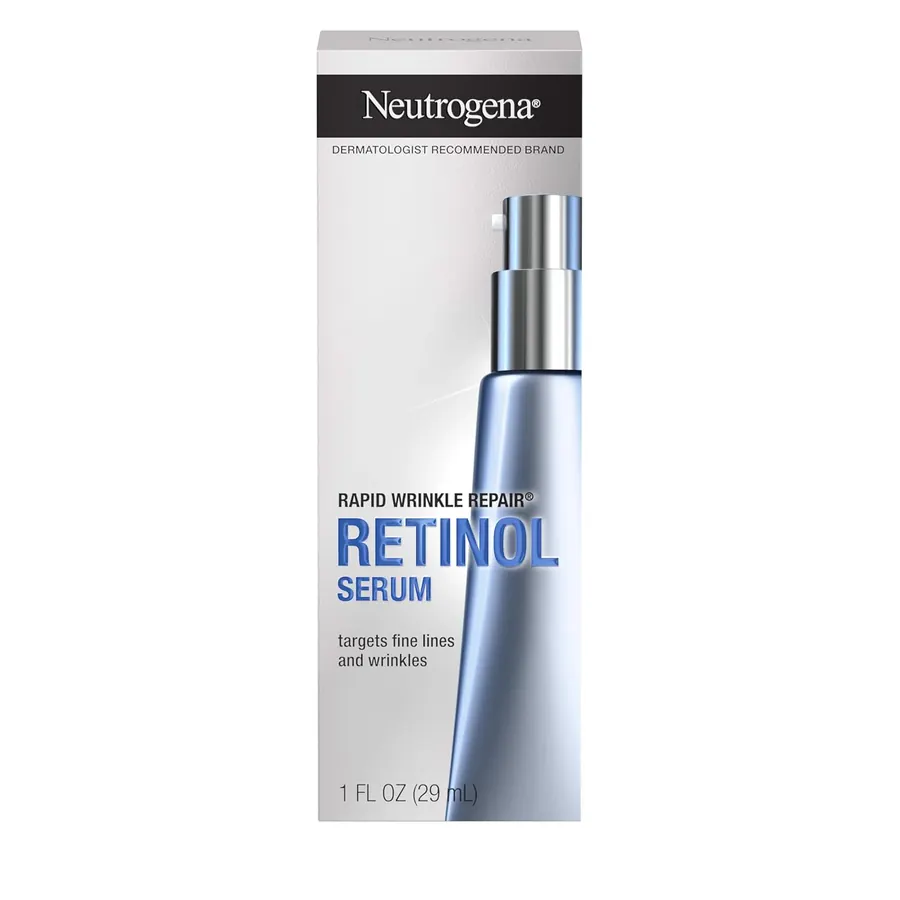
I spent three months testing different retinol products and introduction protocols, keeping notes on what caused flaking and what didn't. The Neutrogena Rapid Wrinkle Repair Retinol Face Serum ended up being the product I recommend to first-timers most often, and this guide is built around using it correctly. If you already bought a different retinol, the steps still apply. The pacing and pairing rules matter more than which bottle you choose.
Starting slow is easier when your retinol isn't fighting your skin.
The Neutrogena Rapid Wrinkle Repair Retinol Serum uses a stabilized retinol formula with hyaluronic acid built in, which helps beginners tolerate those first few weeks without adding a separate hydration layer. Rated 4.4 stars by 6,243 Amazon reviewers.
Amazon Check Today's Price on Amazon →Step 1: Clear the Deck of Actives for the First Two Weeks
Before you put retinol on your face, look at everything else in your current evening routine. Retinol does not play well with other actives during the introduction phase. Specifically: AHAs (glycolic acid, lactic acid), BHAs (salicylic acid), benzoyl peroxide, and vitamin C should all be used at separate times or temporarily moved to your morning routine while you establish retinol at night.
This is the step most people skip because they don't want to give up products that are working. But layering a new retinol on top of an AHA exfoliant is how you get the kind of redness and peeling that sends people to the medicine cabinet looking for hydrocortisone. The actives compound each other's effects on the skin barrier. For the first two weeks, your evening routine should be: gentle cleanser, retinol, moisturizer. That's it. Once your skin has adjusted (usually around week four), you can start reintroducing other actives, but keep them on alternate nights rather than stacking them on the same application.
If you're curious about how retinol compares to other anti-aging actives or which concerns it addresses best, our guide covering 10 ways retinol serum changes your skin over time is a useful primer on what to actually expect, month by month.
Step 2: Start with Two Nights Per Week, Not Seven
The standard advice on retinol boxes says to apply every evening. That's appropriate for skin that has already adapted, not for someone in their first month. Starting at seven nights a week is the single biggest reason beginners end up red and flaky by day ten and give up entirely.
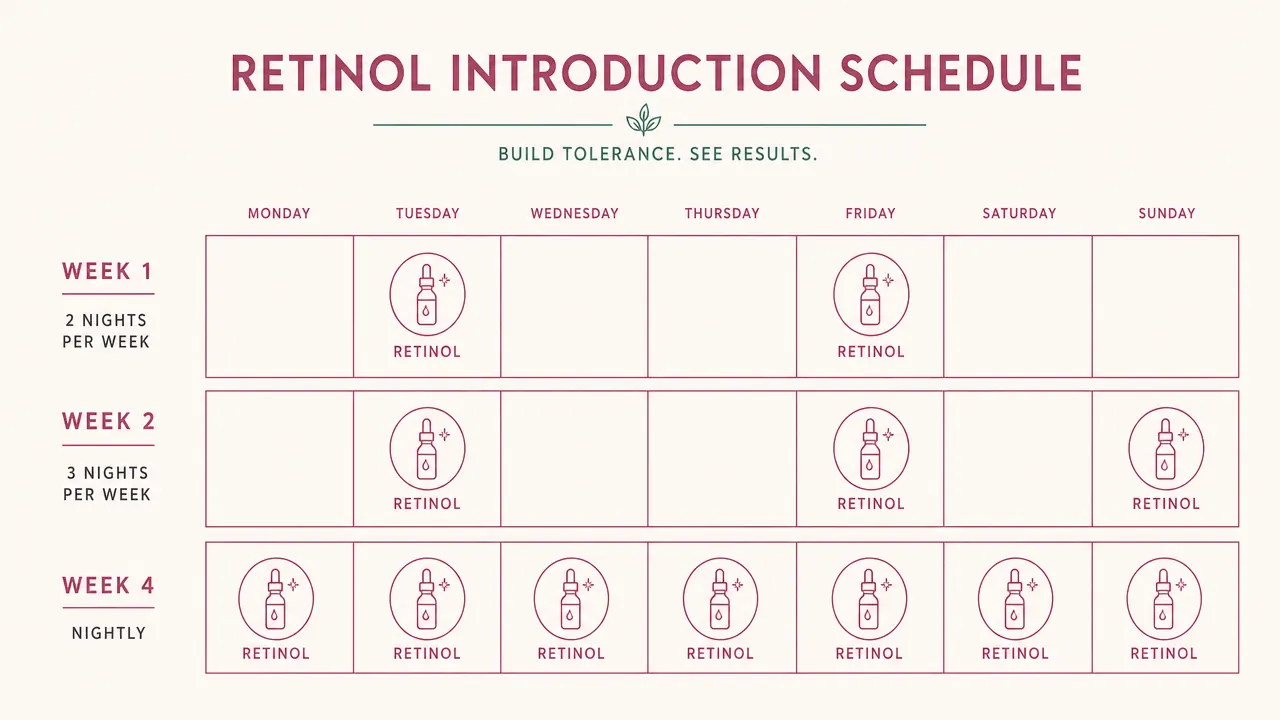
Weeks one and two: use retinol on two non-consecutive nights. Tuesday and Friday works well. On the other nights, use your regular moisturizer. Weeks three and four: add a third night. Weeks five through eight: increase to four or five nights if your skin is tolerating it without redness or tightness. By month three, most people with normal to combination skin can use it nightly. People with dry or sensitive skin may stay at four to five nights permanently, and that's fine. Consistent lower-frequency use outperforms sporadic daily use every time.
The chart above shows this ramp-up visually. Print it or screenshot it if you need a reminder for the first few weeks.
Step 3: Use Less Product Than You Think You Need
For a serum, a pea-sized amount covers the entire face. Maybe slightly more if you have a longer face or want to extend to the neck. The instinct is to apply generously, especially because retinol serums are often thin in texture. Resist that instinct. More product does not mean faster results. It means more irritation.
With the Neutrogena Rapid Wrinkle Repair Retinol Serum specifically, the formula is already fairly rich relative to most serums, with hyaluronic acid in the base. One pump or one small squeeze from the tube is enough. Spread it across your forehead first, then both cheeks, then chin. Avoid the immediate eye area entirely (the skin there is thinner and more reactive) and the corners of the nose, where retinol tends to pool and cause unnecessary irritation. If you want to address fine lines around the eyes, do it with a dedicated eye-area retinol or an eye cream rather than nudging this serum closer and closer to your lash line.
A pea-sized amount for the whole face. If you used more than that, you used too much.

Step 4: Always Follow with a Plain, Barrier-Supporting Moisturizer
Retinol increases cell turnover. That process temporarily disrupts the outer skin barrier, which is what causes the dryness and flaking that people associate with the adjustment period. A moisturizer applied directly on top of your retinol replenishes some of that disrupted barrier and keeps the irritation manageable.
The moisturizer you choose matters. You want something unfragranced, without active acids, and ideally with ceramides or hyaluronic acid. CeraVe Moisturizing Cream or Vanicream Moisturizing Cream are standard recommendations because they're effective and inexpensive. Apply immediately after the retinol, while the serum is still slightly tacky on the skin. If your skin is particularly dry, you can try the "sandwich" method: moisturizer first, then retinol on top, then moisturizer again. Sandwiching buffers the retinol slightly and reduces irritation without significantly reducing effectiveness for beginners.
What to avoid: fragranced creams, anything with vitamin C or acids in the formula, and heavy oils that may trap heat or interfere with retinol absorption. This is not the night for your five-product routine. Keep it simple.
Step 5: Wear SPF Every Morning Without Fail
Retinol makes your skin more sensitive to UV radiation, particularly during the first several months of use. This is not a hypothetical or a marketing note on the packaging. The fresh cells that retinol cycles to the surface are less protected than the older cells they replace, and they burn more easily. Skipping sunscreen while using retinol actively works against the results you're trying to achieve, since UV damage creates the very hyperpigmentation and collagen breakdown that retinol is meant to address.
SPF 30 at minimum, SPF 50 preferred. Apply it as the last step of your morning routine, after moisturizer, before makeup if you wear it. The good news is that sunscreen is the one step that compounds your retinol results more than any other. You are protecting the new skin that retinol is working hard to produce. People who pair retinol with consistent daily SPF see noticeably better outcomes at month four than people who skip sun protection.
For a deeper look at what this product actually delivers over months of consistent use, see our full Neutrogena Rapid Wrinkle Repair Retinol Serum review, which covers texture changes, fine line improvements, and the adjustment timeline from someone who ran a five-month test.
What Else Helps During the Adjustment Period
Beyond the five steps, a few smaller decisions make the adjustment period easier. First, apply retinol to completely dry skin. Skin that is still damp after cleansing absorbs actives more deeply, which increases the chance of irritation. Pat your face dry and wait two to three minutes before applying. Second, do not use a washcloth or physical exfoliant during your retinol nights. The mechanical friction on top of a retinol application is redundant at best and damaging at worst. Third, if you notice redness or flaking that seems worse than expected, scale back to once a week rather than stopping entirely. A temporary step back is not a failure. It is just a slower ramp.
Some people also experience what is loosely called a retinol purge in the first four to six weeks, where blemishes seem to get worse before they improve. This happens because retinol accelerates the cycle of skin cell turnover, which pushes anything lurking beneath the surface up faster. It is not an allergic reaction, and it is not a sign the product is wrong for your skin. It typically resolves on its own by week six to eight. If you are still breaking out at week ten, that is worth a conversation with a dermatologist.
Finally, give it time. Three months is the minimum window to see meaningful changes in fine line depth or skin texture. Six months is where people start noticing the difference in photos. The most common reason retinol does not work for someone is that they quit at week three.
The serum that holds up when you follow the introduction protocol.
Neutrogena Rapid Wrinkle Repair Retinol Serum is a straightforward entry point into retinol. Stabilized formula, hyaluronic acid built in, and priced for a multi-month commitment without budget strain. If you're ready to start, get today's price on Amazon before you start your ramp schedule.
Amazon Check Today's Price on Amazon →