

For a stretch of about two years, the question I heard most often from coworkers and acquaintances was some version of the same thing: "Are you feeling okay?" or "Did you sleep at all last night?" I was sleeping fine. I was not sick. I just had the kind of under-eye situation that reads as exhausted regardless of how rested I actually am. Dark, bluish-purple circles that sat low on the orbital bone, and a persistent puffiness in the morning that rarely fully deflated by noon.
I had been buying eye creams for years with no particular strategy. A peptide cream I found at a department store. A caffeine roller I grabbed because the packaging looked clinical. A vitamin K serum a coworker swore by. None of them did nothing, exactly, but none of them did much either. The circles stayed. The puffiness stayed. And I stayed answering the same well-meaning questions about whether I was tired.
What I kept running into, when I actually read ingredient lists, was that many eye creams are mostly filler. A heavy emollient base, a token amount of some active, and marketing language doing the rest of the work. At that point in my routine, I was already using a niacinamide serum on the rest of my face and had noticed what a real active ingredient actually felt like over time. I started wondering if the eye area just needed something simpler and more consistent.
A dermatologist friend mentioned offhand that she recommends CeraVe to a lot of patients who come in frustrated with the eye area. Not because it is a prescription product or because it has some proprietary complex, but because it covers the basics well: ceramides to support the skin barrier, hyaluronic acid for moisture, and niacinamide to help with the discoloration that makes circles look darker than they are. She noted that under-eye skin is thin and actually absorbs ingredients efficiently, which means a well-formulated, gentle product can do more than people expect.
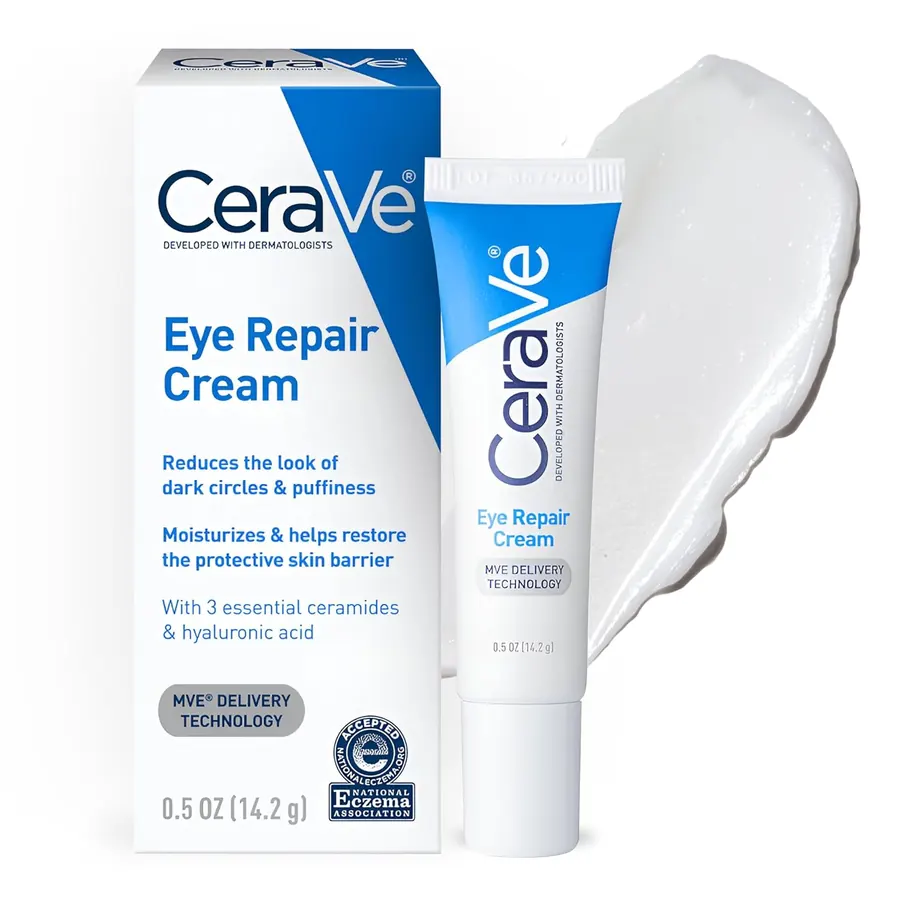
I ordered the CeraVe Eye Repair Cream. It costs less than a large coffee drink with a lot of steps. The jar is small, about half an ounce, which initially concerned me, but the amount you use per application is genuinely tiny. A grain-of-rice amount per eye, morning and night, pressed gently with the ring finger.
The question I heard most often changed. Not overnight. Around week six, a friend said I looked well-rested. She meant it as a passing compliment. I did not correct her.

The texture is not what I expected. I had been using creams that felt thick and required real blending. This one applies like a light balm, sits flat without pilling, and does not migrate into the eye during the day, which was a consistent problem I had with two of my previous products. Under makeup it held fine. Under sunscreen it held fine. It did not make my under-eye area look greasy in photos, which is a subtle but real problem with some heavier eye creams.
The first two weeks I noticed nothing dramatic. The skin felt more comfortable, less tight in the morning. The puffiness on waking was still there, but it seemed to settle faster, maybe by nine or ten in the morning instead of lingering until early afternoon. I was not sure if that was the cream or just variation. I kept going.
If your under-eye area looks worse than you feel, this is the first product I would try.
CeraVe Eye Repair Cream is gentle enough for daily use morning and night, does not pill under makeup, and costs less than most single-use treatments. Check today's price on Amazon before it changes.
Amazon Check Today's Price on Amazon →By week four, I noticed the dark circles were shifting in character. They were not gone. Structural darkness, the kind that comes from the orbital bone casting a shadow, is not something any topical product will touch. But the purplish discoloration that sat on top of the skin, the kind that reads as pigment rather than shadow, had faded. It looked more like a faint under-eye shadow and less like the bruised look I had been dealing with.
If you want to go deeper on exactly what the ingredients are doing and how to layer this cream into a full morning routine, the full guide on how to reduce puffy eyes with eye cream covers application technique, product order, and what pairs well with it. That piece helped me understand why the ring finger tap-in method matters more than it sounds.

The question I heard most often changed. Not overnight. Around week six, a friend said I looked well-rested. She meant it as a passing compliment. I did not correct her. A few weeks after that, a coworker who had asked me multiple times if I was sick said I looked like I had been on vacation. I had not. I had just been consistent with a budget eye cream for eight weeks.
There are things it did not do. It did not eliminate structural shadows. It did not address the fine lines at the outer corners of my eyes in any meaningful way. If line reduction is the primary goal, something with a low concentration of retinol would be a more direct approach. But for the puffiness, the discoloration, and the overall quality of the skin in that area, the CeraVe formula did exactly what my dermatologist friend said it would. The full long-term review of CeraVe Eye Repair Cream goes into what the four-month picture looks like and what realistic expectations should be.
What I Would Tell You If We Were Sitting at My Kitchen Table
The honest thing is this: most eye creams are not doing what you think they are doing. The ones with long ingredient lists and high prices are usually not outperforming a simple, well-formulated option on the same underlying issue. The under-eye area needs consistency more than it needs complexity. A gentle moisturizer with ceramides and niacinamide, applied twice a day, every day, for at least six to eight weeks, will show you what is actually possible for your skin.
Start there before spending more. If you have been cycling through expensive eye creams without sticking to any one of them long enough to know whether they work, this is the one I would start with. It is affordable enough that you will not resent the experiment. It is gentle enough that you are not risking irritation on that thin skin. And if it works the way it worked for me, you will stop hearing those questions about whether you got enough sleep.
Eight weeks is the honest test window. This cream is the one I would stake those eight weeks on.
CeraVe Eye Repair Cream with ceramides, hyaluronic acid, and niacinamide. Oil-free, fragrance-free, and budget-friendly. The current price on Amazon is worth a look.
Amazon Check Today's Price on Amazon →