
If you have spent any time researching mineral sunscreens for daily face wear, you have almost certainly landed on these two: EltaMD UV Sheer SPF 50+ and La Roche-Posay Anthelios Mineral SPF 50. Both are dermatologist-recommended. Both use zinc oxide as the active ingredient. Both land in the same price range. And both have devoted followings that will tell you the other one is wrong.
The short answer: EltaMD UV Sheer is the better daily-wear sunscreen for most face skin types, particularly anyone dealing with oiliness, combination skin, or sensitivity to heavy textures. La Roche-Posay Anthelios Mineral has real strengths too, especially for very dry or mature skin that needs more cushion. But for the widest range of everyday use, UV Sheer wins on finish, wear, and how it layers under makeup. I have used both on my face for long stretches and the difference is noticeable by mid-afternoon.
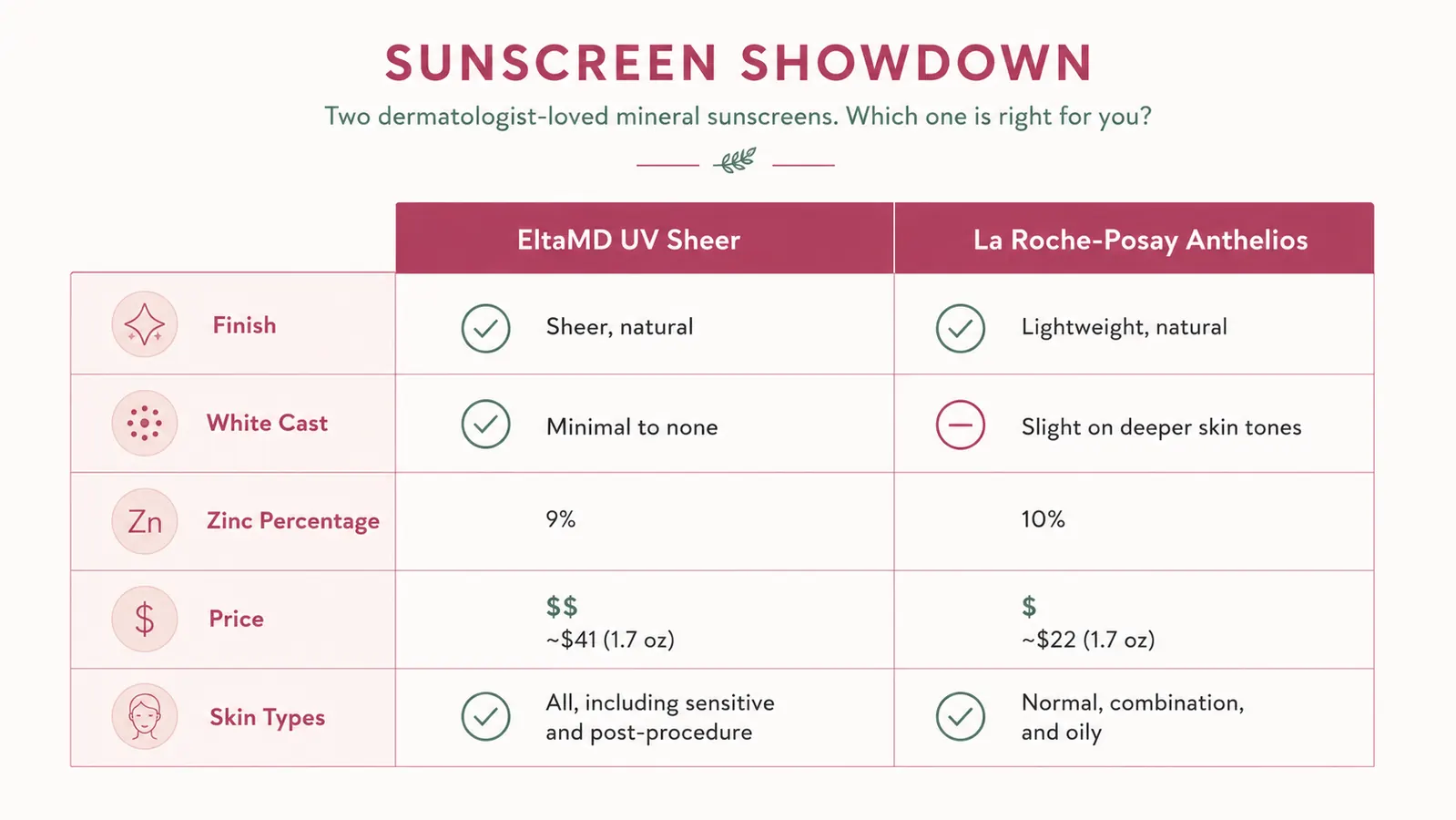
| EltaMD UV Sheer SPF 50+ | La Roche-Posay Anthelios Mineral SPF 50 | |
|---|---|---|
| Active Ingredient | Zinc Oxide 9% | Zinc Oxide 11%, Titanium Dioxide 4% |
| Finish | Semi-matte, skin-like | Satin, slightly dewy |
| White Cast | Minimal on fair-medium skin tones | Moderate, especially on deeper skin tones |
| Texture | Lightweight, watery-cream | Richer, lotion-weight |
| Under Makeup | Excellent primer base | Adequate, can pill slightly |
| Added Actives | Hyaluronic acid | Anthelios Cell-Ox Shield technology, glycerin |
| Reef Safe | Yes (mineral only) | Yes (mineral only) |
| Fragrance-Free | Yes | Yes |
| Price (current) | Mid-range for 3 oz | Mid-range for 1.7 oz |
| Best For | Oily, combination, sensitive skin | Dry, mature, or eczema-prone skin |
Where EltaMD UV Sheer Wins
The finish is the headline. UV Sheer dries down to something that genuinely looks like skin, not like a face that had sunscreen applied to it. The zinc oxide concentration is lower at 9%, which is part of why it blends so cleanly and leaves so little residue. On medium skin tones, I could not detect a white cast once it was buffed in. On fair skin it disappears almost completely. That is not true of most mineral sunscreens in this category, and it is the single reason I reach for UV Sheer when I know I am doing a full makeup day or have an event.
The formula also contains hyaluronic acid, which keeps the skin surface plump and prevents that tight, stripped feeling you get from matte chemical SPFs. It layers cleanly over serums. It does not ball up under foundation. And at a competitive price for a 3-ounce tube, it actually delivers more product per dollar than Anthelios when you run the math per ounce. If you want a deep look at how this sunscreen performs over months of daily use, the EltaMD UV Sheer long-term review covers wear, reapplication, and how it holds up through sweaty summers.
If finish and wearability matter most, EltaMD UV Sheer is worth checking out.
It has 3,700+ Amazon reviews, a 4.6-star rating, and it is the mineral SPF I keep coming back to after testing alternatives.
Amazon Check Today's Price on Amazon →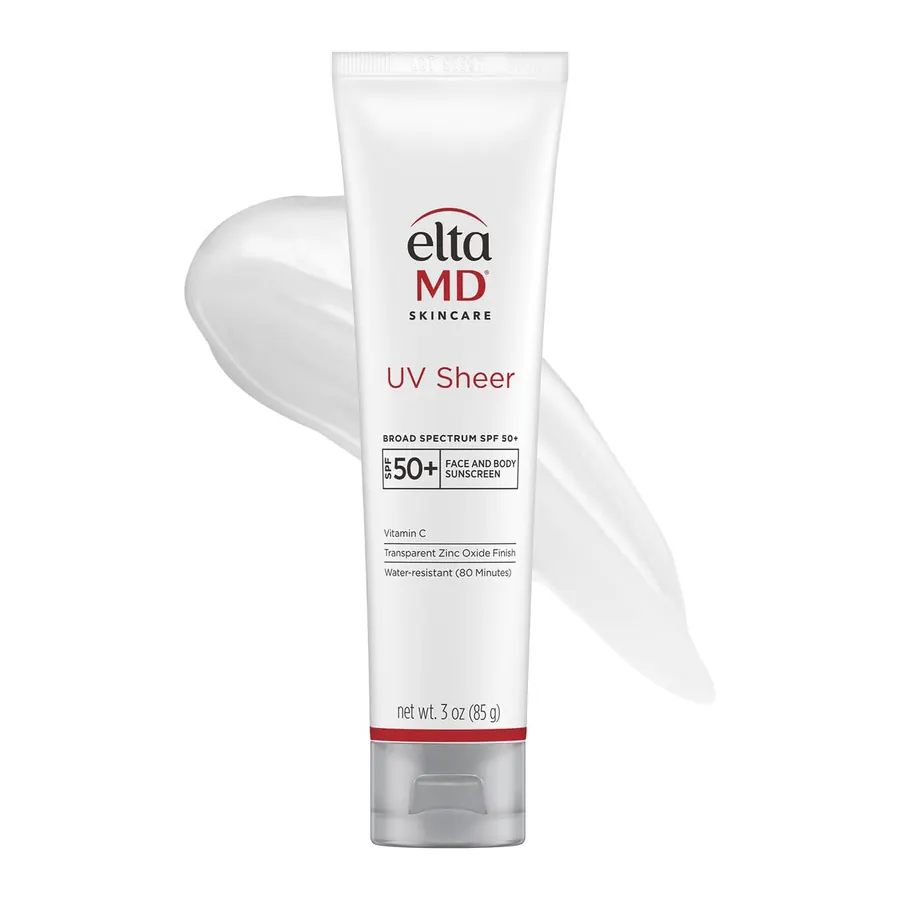
Where La Roche-Posay Anthelios Mineral Wins
Anthelios uses a dual-active formula with both zinc oxide (11%) and titanium dioxide (4%), which gives it broader and arguably more robust coverage. The higher active load is part of why the finish reads slightly more opaque, but it also means the protection is dense. For anyone who spends real time outdoors, or who has very fair, reactive, or rosacea-prone skin that needs maximum shielding, that extra coverage can be worth the tradeoff.
The texture is richer. For dry or mature skin that tends to go flaky under matte formulas, Anthelios provides more of a cushion. It does not strip moisture the way some SPF 50s do. The La Roche-Posay brand also has strong credentials in dermatology and for people with eczema or sensitive skin conditions, the LRP formulations often feel more compatible. The white cast is more noticeable on deeper skin tones, which is a real limitation, but for fair-skinned users it is less of an issue.
UV Sheer dries down to something that looks like skin. Anthelios gives you more coverage and cushion. The question is which tradeoff you care about more.
Texture and Wear: A Day-Long Reality Check
This is where the practical difference gets concrete. UV Sheer applies as a light, slightly watery cream that absorbs within about 60 seconds. By 10 minutes, it has fully set and there is no sticky or greasy residue. Foundation goes on cleanly on top. At 4 hours it still looks like skin. At 8 hours on a warm day, there is some midday shine on the T-zone, which is normal for any SPF. But it is not the heavy, visible film some mineral sunscreens leave.
Anthelios applies more like a lotion and takes slightly longer to absorb. It leaves a soft-focus finish that can read as slightly dewy, which is genuinely nice on dry skin but less ideal on combination. Under powder foundation it performs fine. Under liquid foundation, some users notice very slight pilling if they rush the application. The answer there is to wait 90 seconds before applying makeup, which solves it completely.
The White Cast Problem: Who Is Affected
Mineral sunscreens and white cast go together. The question is how much. EltaMD UV Sheer is one of the lower-cast mineral options available, largely because the zinc concentration is on the lower end of SPF 50+ formulas. On fair and light-medium skin tones, the cast is essentially invisible once blended. On medium-deep and deep skin tones, there is still a detectable chalky residue that does not fully disappear. This is not unique to EltaMD but it is an honest limitation of the format.
La Roche-Posay Anthelios has a more noticeable white cast in most testing, largely because of the titanium dioxide addition. Titanium dioxide is known to leave a whiter residue than zinc oxide alone. For deeper skin tones, both options have limitations, but EltaMD is the cleaner choice between the two.
Ingredients Worth Knowing
EltaMD UV Sheer keeps the formula lean. Zinc oxide, hyaluronic acid, and a short inactive ingredient list. No fragrance, no parabens, no oxybenzone. The simplicity is intentional and it is why the formula tends to sit well on sensitive or reactive skin. There is nothing in there to set off a reaction.
Anthelios includes its proprietary Anthelios Cell-Ox Shield technology, which La Roche-Posay describes as an antioxidant booster that supports photoprotection. The formula also contains glycerin for added hydration. Both formulas are fragrance-free, which is non-negotiable for me in a face sunscreen. Building a consistent SPF routine takes the right product for your skin type. If you want a full walkthrough of how to make sunscreen a non-negotiable daily habit, the guide to building a daily sunscreen habit covers the full routine framework.
Who Should Buy Which
Choose EltaMD UV Sheer SPF 50+ if: you have oily, combination, or normal skin; you wear foundation daily and need a SPF that does not interfere with your base; white cast is a dealbreaker; you want a product that feels lightweight enough to actually wear every single day without dread. It is also a solid choice for people who run warm, work in office environments, or have post-procedure sensitivity because the formula is calm and inoffensive.
Choose La Roche-Posay Anthelios Mineral SPF 50 if: you have dry or mature skin that needs more moisture with its SPF; you prioritize maximum protection over finish refinement; you are managing a skin condition like rosacea or eczema and want a formula with the LRP dermatological heritage behind it; or you tend to go makeup-free and do not need to layer under anything.
Neither is a bad sunscreen. Both protect. Both are reef-safe. Both are fragrance-free. The difference comes down entirely to what your skin needs from the texture and finish, and what your daily routine demands. For most people reading this, who are wearing foundation, who are combining their SPF with serums, and who want something that disappears into the skin, EltaMD UV Sheer is the more practical daily pick.
EltaMD UV Sheer is still the one I keep restocking.
Clean formula, minimal white cast, excellent under makeup. Check current pricing on Amazon before it sells out at your preferred retailer.
Amazon Check Today's Price on Amazon →