
Oily skin is not a cleansing problem. Washing your face twice a day with a strong cleanser and following up with an alcohol-heavy toner does not reduce oil long-term. It usually makes things worse because it strips the barrier and triggers your sebaceous glands to produce more oil to compensate. What oily, congested skin often needs is regulation, not aggression. That is where niacinamide comes in.
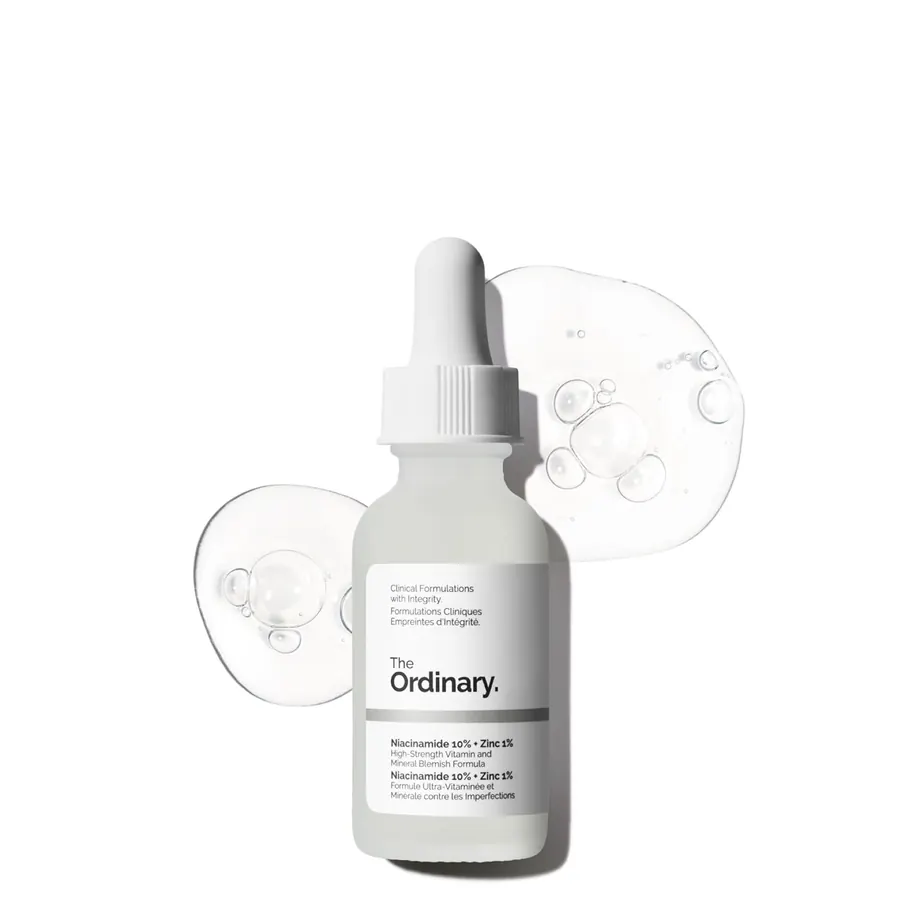
Niacinamide is a water-soluble form of vitamin B3. It works at the skin level rather than stripping the surface. Used consistently over four to eight weeks, it addresses pore appearance, oil volume, blemish frequency, uneven tone, and barrier integrity, often at the same time. The version I keep coming back to is The Ordinary Niacinamide 10% + Zinc 1%, a straightforward 1 fl oz serum with a near-colorless texture that layers under everything else without issue. Over 56,000 Amazon reviews have landed at 4.7 stars. Below are the ten specific ways niacinamide works on skin like mine.
Your pores are not going to shrink with another clay mask. Try the budget serum with 56,000 reviews instead.
The Ordinary Niacinamide 10% + Zinc 1% is the most reviewed niacinamide formula on Amazon, 4.7 stars across more than 56,000 ratings. One bottle, one routine step, one month to see whether it works for you.
Amazon Check Today's Price on Amazon →Niacinamide Reduces How Much Sebum Your Skin Produces
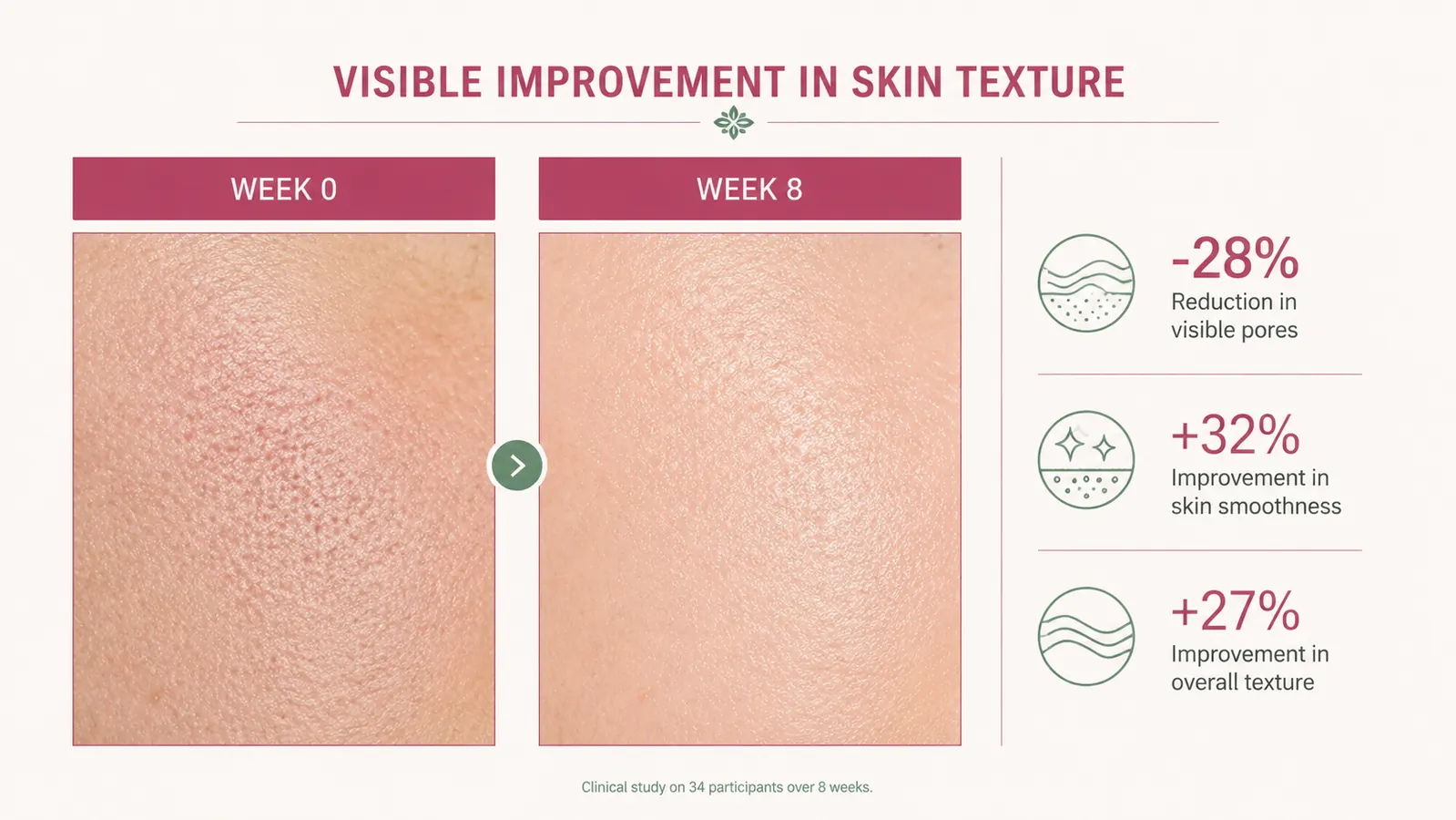
Niacinamide at 10% concentration has been shown in controlled studies to reduce sebum excretion rates by decreasing lipid synthesis in sebocytes, the cells responsible for oil production. This is not temporary mattifying like a primer. With consistent use, the skin actually produces less oil at the source. In the first two weeks you may not notice much. By week six, most people with oily skin report that noon shine arrives later in the day, or not at all.
Niacinamide Tightens the Appearance of Enlarged Pores
Pores do not literally open and close, but their appearance changes based on how much debris and sebum is sitting in them. Niacinamide reduces that sebum load and supports the structural proteins around pores, making them look smaller and less defined over time. If you have always used blurring primers as a workaround, this is the version that actually addresses the cause. If you want the full routine for using niacinamide specifically for pore work, the guide at <a href="/ordinary-niacinamide-serum-review-long-term">my three-month review of The Ordinary Niacinamide on oily skin</a> walks through exactly how I layer it.
Niacinamide Calms Active Blemishes Without Drying Skin Out
Benzoyl peroxide and salicylic acid are effective for blemishes but they are also drying, and oily skin that is also dehydrated is a frustrating combination to manage. Niacinamide reduces inflammatory cytokines in the skin, which is what drives the redness and swelling around a blemish. It does this without removing moisture. You can use it on active breakouts and on clear patches of skin simultaneously without the patchy dryness that comes from targeted drying treatments.
Niacinamide Fades Post-Blemish Marks Over Time
The dark spots left behind after a blemish clears, called post-inflammatory hyperpigmentation, are one of the more stubborn parts of oily, blemish-prone skin. Niacinamide inhibits the transfer of melanin to skin cells, which gradually lightens those residual marks over eight to twelve weeks. It is not instant, but it is steady. On my own skin, the marks from breakouts in month one were noticeably lighter by month three, and I was not using anything else targeting pigmentation at the same time.
Niacinamide Strengthens the Skin Barrier
Oily skin types often have a compromised barrier from years of over-cleansing or using too many actives at once. Niacinamide stimulates ceramide production, which is one of the main building blocks of a healthy moisture barrier. A stronger barrier means less water loss through the surface, less reactive redness, and, counterintuitively, less oil production because the skin is not trying to compensate for lost moisture. This is the benefit that people with oily skin most often overlook when they write off niacinamide as only a pore treatment.
Niacinamide Evens Out Skin Tone on Congested Areas
Skin that is frequently congested or breaking out tends to be uneven in color, not just in texture. Niacinamide's effect on melanin transfer improves overall evenness alongside spot treatment. On the nose, chin, and forehead, where oily skin tends to concentrate, consistent niacinamide use produces a more uniform base tone. Makeup sits better as a secondary result, though you do not need to wear makeup to notice the difference.
Niacinamide Tolerates Being Layered with Other Actives
One of the practical reasons niacinamide works so well for oily skin routines is that it cooperates with most other ingredients. It layers cleanly under retinol, vitamin C, BHAs, and AHAs without neutralizing them or causing reactions. The zinc in The Ordinary's formula adds mild antimicrobial support and also regulates oil without stripping. If you are comparing niacinamide to a BHA exfoliant and wondering which one to add first, the comparison at <a href="/ordinary-niacinamide-vs-paula-choice-bha">The Ordinary Niacinamide vs. Paula's Choice BHA</a> covers how to think about that decision.
Niacinamide Reduces Redness Without Irritation
Oily skin and redness often show up together, especially around active blemishes and on skin that has been over-treated with harsh products. Niacinamide's anti-inflammatory pathway reduces surface redness across the face, not just at blemish sites. It does this without adding any sensitizing ingredients. For people whose skin gets easily reactive, niacinamide is one of the few actives that genuinely reduces redness rather than contributing to it when used incorrectly.
Niacinamide Works on Blackheads Over Time
Blackheads form when oxidized sebum and dead skin cells accumulate in a follicle. Niacinamide reduces the sebum supply and over time that means less raw material available to form new blackheads. It will not dissolve existing blackheads the way a BHA does, but as part of a longer routine it reduces how frequently new ones appear. If blackheads are a primary concern, niacinamide works best as a supporting ingredient alongside a once or twice weekly salicylic acid step.
Niacinamide Is One of the Lowest-Risk Actives You Can Add to a Routine
Most actives require an adjustment period, a slow introduction, or careful timing relative to other products. Niacinamide does not. It is well-tolerated at 10% even on sensitive skin. There is no purge phase, no photosensitivity risk, and no wait time required after washing your face. You apply it, let it absorb for 30 seconds, and continue with the rest of your routine. For anyone who has had bad experiences with retinol or acids and wants a softer starting point for improving oily, congested skin, niacinamide is the place to start.
What I Would Skip
Niacinamide is not a spot treatment for an active cyst. It also will not remove existing blackheads or resurface textured skin the way a chemical exfoliant can. If you want deep exfoliation, a BHA or AHA belongs in your routine alongside niacinamide, not instead of it. And if your oily skin comes with a lot of active acne, niacinamide supports the process but it is not a replacement for a targeted acne treatment. Think of it as the thing that keeps your skin stable and regulated so your other products can do their job more effectively.
Niacinamide does not fight oily skin the way a harsh toner does. It teaches your skin to produce less oil in the first place. That is the difference between managing a symptom and changing the underlying behavior.
One serum, ten benefits, under seven dollars. The Ordinary Niacinamide 10% + Zinc 1% is where oily skin routines usually start.
4.7 stars across more than 56,000 Amazon reviews. Formulated at the concentration that research supports. No fragrance, no complicated layering rules, no adjustment period. If you have been putting off trying niacinamide, this is the version to start with.
Amazon Check Today's Price on Amazon →