

I spent about four years ignoring vitamin C serum. It seemed like a nice-to-have, the kind of product that gets recommended on every "glass skin" list but never actually explained. Then I started reading the clinical research, tested a few formulas on my own skin, and realized I had been skipping one of the most well-documented ingredients in topical skincare. This list is what I wish someone had handed me earlier: ten specific things vitamin C serum does, grounded in how the ingredient actually works, not in marketing copy.
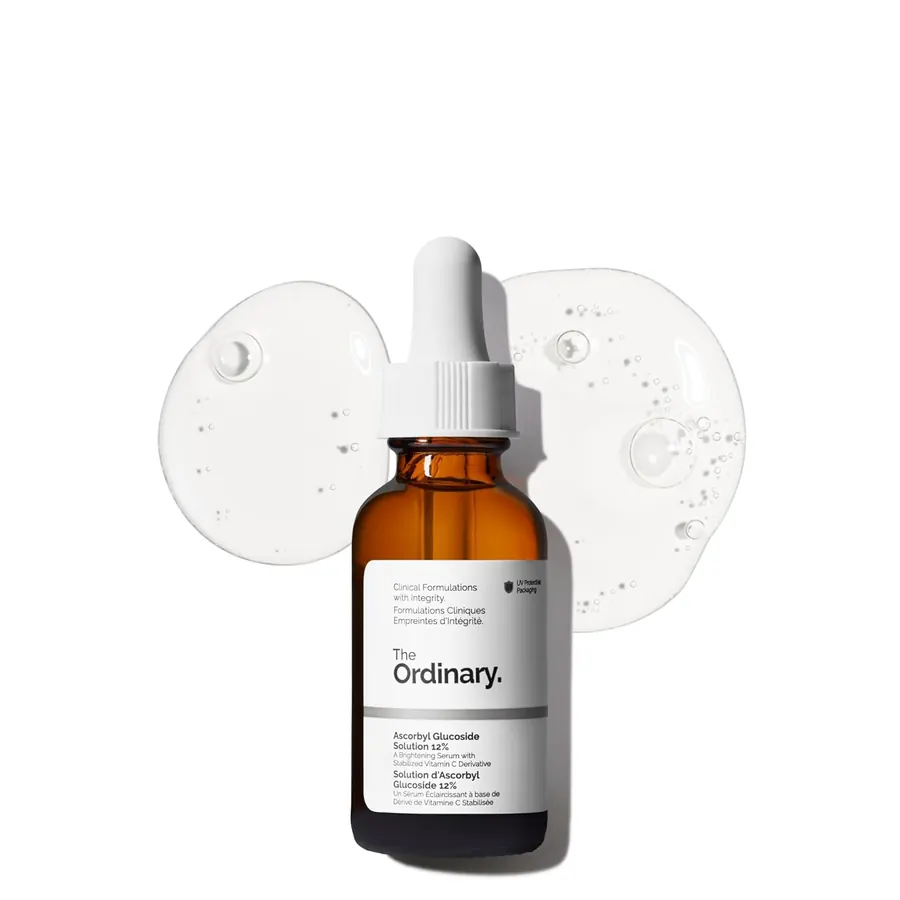
The product I come back to most often is The Ordinary Ascorbyl Glucoside Solution 12%, a stabilized vitamin C derivative that costs less than a lunch and is gentle enough for daily morning use. I mention it throughout because it is the formula I have the most firsthand time with, but the benefits below apply to vitamin C broadly. If you want the full breakdown of that specific serum, I have a long-term review of The Ordinary Vitamin C worth reading before you buy.
Your skin is already losing collagen daily. Vitamin C serum is one of the few things that may slow it down.
The Ordinary Ascorbyl Glucoside Solution 12% is a stable, non-irritating vitamin C formula rated 4.6 stars across more than 2,200 reviews. It layers under SPF without pilling, has no gritty texture, and costs about what you would spend on a single coffee.
Amazon Check Today's Price on Amazon →Vitamin C blocks the enzyme that makes dark spots darker
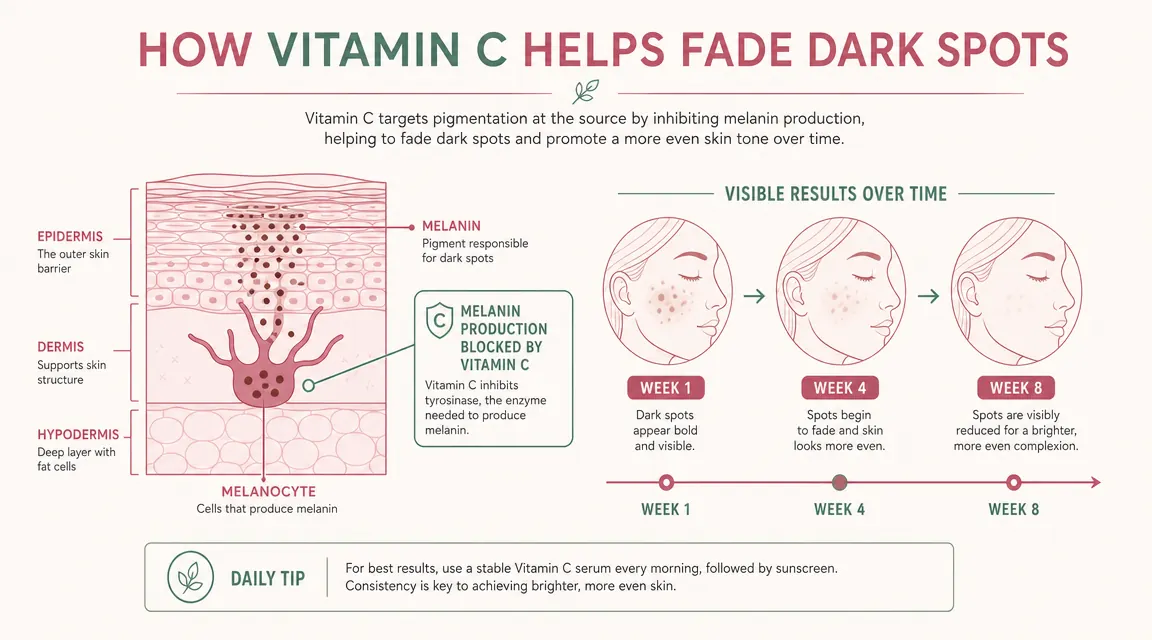
Melanin production runs through an enzyme called tyrosinase. Vitamin C, particularly ascorbic acid and its derivatives like ascorbyl glucoside, inhibits that enzyme directly. When you apply vitamin C serum in the morning, you are interrupting the process that deepens existing spots and creates new ones. You are not bleaching skin. You are working upstream, at the melanin-production step. Most people start seeing lighter tone at existing spots around week four to six with daily use.
Vitamin C serum supports collagen synthesis
Your skin makes collagen with the help of cofactors, and ascorbic acid is one of them. When topical vitamin C penetrates the dermis, it contributes to the hydroxylation step that stabilizes collagen fibers. Less vitamin C in the skin means slower, weaker collagen formation. Using a vitamin C serum in the morning does not add collagen directly, but it gives your skin's own production process the raw material it needs. The payoff is firmer texture and fewer fine lines over months of consistent use.
Vitamin C serum extends the protective power of your SPF
Sunscreen blocks UV rays mechanically or chemically. Vitamin C works differently: it is an antioxidant that neutralizes free radicals generated when UV light hits your skin. The two work on separate attack vectors, which is why layering vitamin C serum under SPF gives better photoprotection than either one alone. Studies show the combination reduces UV-induced DNA damage more than sunscreen by itself. Vitamin C serum goes on first, then your moisturizer or SPF on top.
Vitamin C brightens overall skin tone, not just spots
Even skin that does not have obvious dark spots often has uneven tone, a mix of slightly darker patches, post-acne marks, and areas where blood vessels sit close to the surface. Vitamin C serum works on all of it, not just the defined spots. Most people notice a general brightening effect within the first two to three weeks, before the deeper spot-fading work shows up. The skin just looks more awake, without any added color or shimmer from the product itself.
Vitamin C serum helps fade post-acne marks faster
Post-inflammatory hyperpigmentation (PIH) is the brownish or pinkish marks left after a breakout heals. Vitamin C serum addresses PIH by targeting melanin production at the source. On top of that, its role in collagen synthesis supports skin repair more broadly. People with medium to deeper skin tones, who tend to experience more pronounced PIH, often see the biggest payoff from consistent vitamin C use. Results take patience, eight to twelve weeks is a realistic target, but the trajectory is clear.
Vitamin C serum earns its place not by doing one dramatic thing, but by doing several quiet, well-documented things at the same time, every morning you use it.
Vitamin C serum reduces the appearance of sun damage over time
Sun damage accumulates for years before it becomes visible as spots, rough texture, or uneven tone. Vitamin C serum cannot undo structural changes in the dermis, but it can slow down new damage and lighten the surface expression of old damage through its melanin-blocking and antioxidant functions. If you pair vitamin C serum in the morning with a solid SPF, you are both neutralizing new UV stress and gradually clearing what earlier sun exposure left behind. If you are comparing formulas, the <a href="/ordinary-vitamin-c-vs-skinceuticals-ce-ferulic">comparison of The Ordinary vitamin C versus SkinCeuticals CE Ferulic</a> is worth a read before spending more.
Vitamin C serum is more stable than most people think, if you choose the right form
Pure L-ascorbic acid is highly effective but oxidizes quickly when exposed to light and air. That is where stabilized derivatives come in. Ascorbyl glucoside, the form in The Ordinary's formula, converts to active vitamin C after absorption and stays stable in the bottle. If you have tried a vitamin C serum that turned orange-yellow in the cabinet and stopped working, you were using an unstabilized formula. Switching to a glycoside or phosphate form extends shelf life without reducing the skin benefit you actually care about.

Vitamin C serum layers cleanly under makeup without pilling
One complaint you hear about vitamin C serums is that they pill under moisturizer or foundation. That usually comes down to formulation, specifically high-viscosity serums or serums that have not fully absorbed before the next layer goes on. The Ordinary Ascorbyl Glucoside Solution is water-thin, absorbs in about 30 seconds, and layers without any residue under SPF or tinted moisturizer. If you have avoided vitamin C serum because you were worried about texture layering, a lightweight formulation solves that entirely.
Vitamin C serum helps with redness and uneven texture, not just tone
Vitamin C has mild anti-inflammatory properties that can calm surface redness over time. It is not a substitute for a dedicated calming treatment if you have rosacea or reactive skin, but for everyday low-grade redness from broken capillaries or irritation, it helps. The skin-texture benefit comes partly from collagen support and partly from the fact that brighter, more even skin reflects light more uniformly, which reads visually as smoother. People often describe their skin as looking more refined after a few weeks, even before they can name exactly what changed.
Vitamin C serum is one of the most cost-effective antioxidants you can put on your face
Antioxidant serums span an enormous price range. The Ordinary Ascorbyl Glucoside Solution 12% is at the lower end and outperforms many formulas that cost four or five times as much. The 1 fl oz bottle lasts most people two to three months with daily use (two to three drops per application). Rated 4.6 stars across more than 2,200 reviews on Amazon, it earns that rating not through flashy marketing but because it is a clean, well-formulated product that does what vitamin C serums are supposed to do, consistently.
What I Would Skip
Vitamin C serum does a lot, but it is not the right tool for every skin concern. If your primary issue is deep acne scarring with textural pitting, vitamin C works on the color component but will not fill in depressions. For that you need resurfacing, whether chemical exfoliants, microneedling, or a prescription retinoid. Similarly, if you have significant active cystic acne, a vitamin C serum is a supporting character at best. Pair it with a niacinamide, a BHA, or a prescription treatment. Vitamin C serum shines as a daily maintenance and brightening tool. It is not a corrective treatment for structural skin issues.
If dark spots, dull tone, or loss of firmness are the problem, vitamin C serum is genuinely one of the most well-supported tools available without a prescription.
Ten reasons is a long list. The short version: vitamin C serum brightens, protects, and supports collagen, every morning, for about what a coffee costs.
The Ordinary Ascorbyl Glucoside Solution 12% delivers all ten of these benefits in a stable, water-thin formula that layers cleanly and lasts months per bottle. More than 2,200 reviewers have made it one of the best-rated vitamin C serums on Amazon at any price point.
Amazon Check Today's Price on Amazon →